What Actually Happens to Old Activewear (And What to Do Instead)
Quick Answer: Most old activewear doesn’t get recycled, whatever bin it goes in — the blended synthetics that make it perform (polyester plus elastane) can’t easily be separated, and most textile “recycling” is downcycling into insulation or rags. The realistic hierarchy is: wear it longer, repair it, demote it, pass it on, then brand take-back or textile collection last.
You put the worn-out leggings in the textile bin, feel mildly responsible, and get on with your day.
Here’s the uncomfortable part: activewear is among the hardest clothing on earth to recycle, and most of it doesn’t get recycled regardless of which bin it goes in. The blended synthetic fabrics that make it perform are exactly what makes it impossible to process.
Here’s why, what the realistic options actually are, and why reducing comes first.
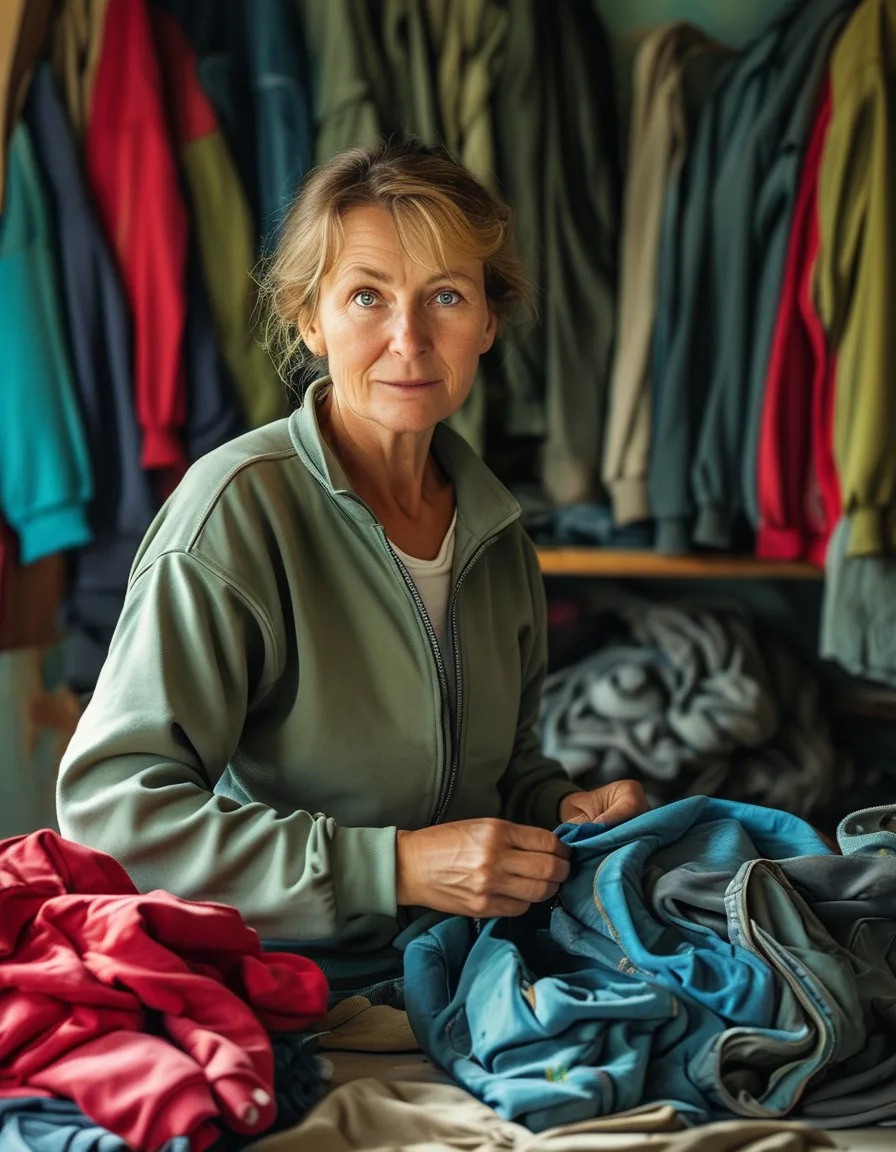
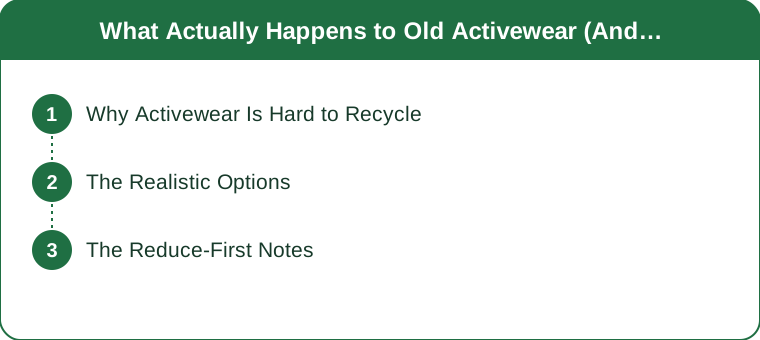
Why Is Activewear So Hard to Recycle?
Five reasons, and they compound.
Blends can’t be separated. A typical legging is 80–90% polyester or nylon with 10–20% elastane. Textile recycling systems are built around single-fiber inputs — cotton, or wool, or polyester. Blended fabrics need the fibers separated first, and at commercial scale that’s still largely unsolved.
Elastane complicates everything. It’s in almost every performance garment, it’s chemically stubborn, and it interferes with both mechanical and chemical recycling processes. It’s the specific ingredient that turns a difficult problem into an impractical one.
Most textile recycling is downcycling. Even when textile recycling happens, it usually produces lower-value material — insulation, carpet underlay, industrial rags — not new fabric. It’s a delay on landfill, not a loop.
Collection doesn’t mean recycling. Clothing dropped in a collection bin is sorted first for resale. What can’t be resold goes to lower-value streams, and a meaningful share is exported, incinerated or landfilled. The bin is a sorting step, not a guarantee.
The volume is enormous. Global textile production has roughly doubled in two decades while processing capacity has not remotely kept pace.
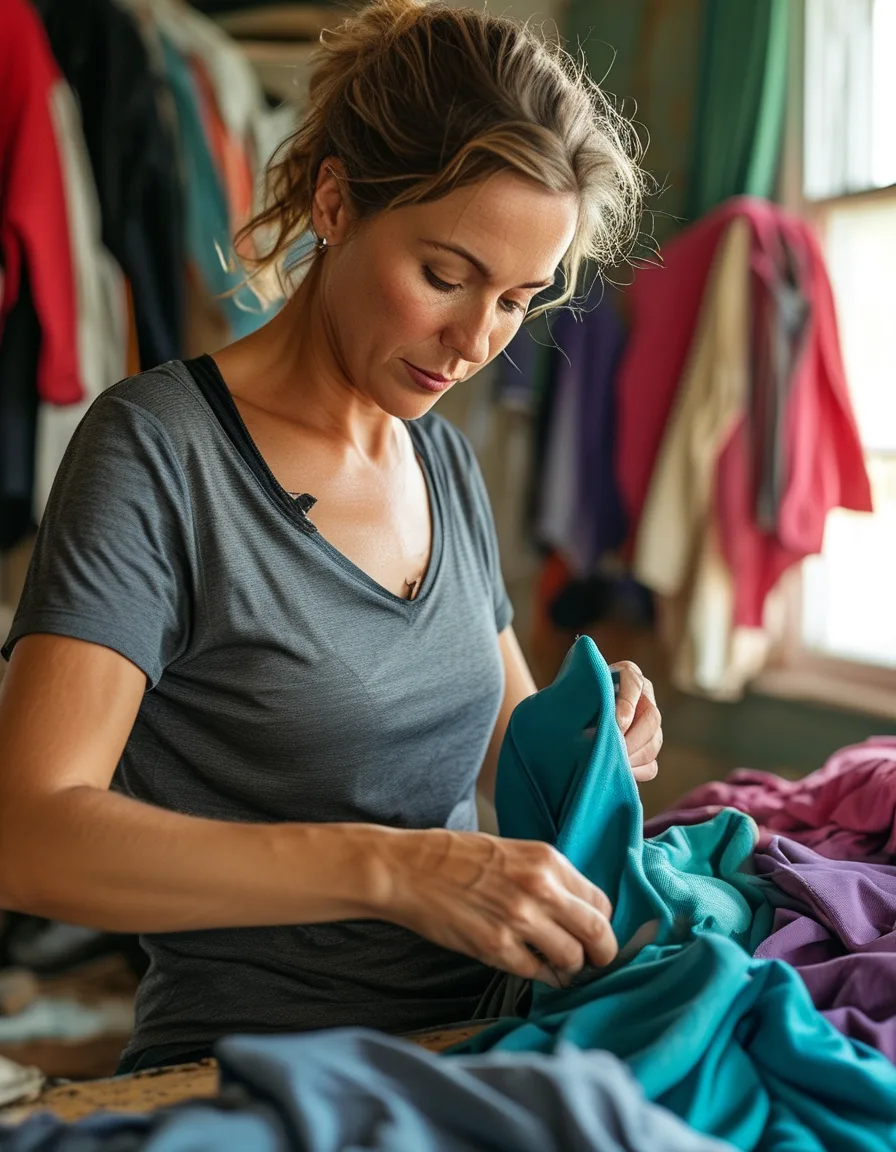
What Should You Actually Do With Old Activewear?
In order of how much it actually helps:
1. Keep wearing it longer. By a wide margin the largest lever available to you. Extending a garment’s active life is worth more than any disposal decision you’ll make about it.
2. Repair what can be repaired. Seams, waistband elastic, small holes, a failed drawstring. A sewing repair costs $10–20 or twenty minutes, and buys years.
3. Demote rather than discard. The leggings that went sheer at the seat are still perfectly good for gardening, decorating, sleeping in, or under snow trousers. Demotion is free and extends life further.
4. Pass on what still performs. Resale platforms, local groups, friends. Someone will use it.
5. Brand take-back schemes, where they genuinely exist and genuinely process. Some are meaningful; some are marketing. Check what happens to the items before assuming.
6. Textile collection for genuinely dead items — and check what your local scheme actually accepts, because many don’t take synthetics or damaged goods.
7. Avoid general waste where possible, as the last resort rather than the default.
Does Buying Less Actually Matter More?
Yes, and by a lot. This is the part the recycling conversation tends to bury.
Buying less outweighs every disposal choice. The environmental cost of a garment is overwhelmingly front-loaded into its production — materials, energy, water, transport — so the single most effective action is one fewer purchase, not one better bin.
The rest of the reduce-first list:
- Buy fewer, better pieces and keep them. Cost-per-wear rewards this anyway.
- Wash cold and line dry. Heat is what degrades elastane; cold washing and air drying meaningfully extends the life of performance fabric. It also cuts energy use.
- Use a wash bag to reduce microfibre shedding — synthetics release microplastics with every wash, and a filter bag catches a portion of it.
- Repair before replacing, as a default rather than an exception.
- Adopt a capsule mindset. Fewer pieces in rotation, each wearing more evenly.
- Be skeptical of recycled-content marketing. “Made with recycled polyester” usually means bottles, not old clothes, and it doesn’t make the garment recyclable at end of life.
Myth vs Fact
Myth: Putting clothes in a collection bin means they get recycled. Fact: It means they get sorted. Resale is the priority; what isn’t resellable enters much less certain streams.
Myth: Recycled polyester activewear closes the loop. Fact: It’s usually made from PET bottles — a one-way trip from a recyclable material into a much less recyclable one. Better than virgin polyester on some measures, but not circular.
Myth: Natural fibers would solve it. Fact: They’d help at end of life, but performance fabric needs stretch and moisture management that cotton and wool don’t fully provide. Merino is the closest thing available, and it isn’t a straight swap.
Myth: Individual choices don’t matter here. Fact: Individual purchasing is genuinely a small lever against industrial-scale production — but wearing things longer is the lever with the clearest, best-evidenced impact available to any individual. That one’s worth doing.
Mini FAQ
How long should activewear last?
With cold washing, air drying and no fabric softener, a good pair of leggings should give 3–5 years of regular use. If yours are dying in one, the care routine is a likely culprit — heat and softener both degrade elastane quickly.
Can I compost old activewear?
No. Synthetic fabrics don’t biodegrade meaningfully and will shed microplastics into the compost. Only genuinely 100% natural-fiber items (untreated cotton, wool, linen) are compostable, and even those need to be shredded and free of elastic and synthetic thread.
Is it worth paying more for a sustainable brand?
It depends entirely on whether the garment lasts longer. A more durable piece worn for five years beats a cheaper one replaced twice, both environmentally and financially — durability is the claim worth investigating, more than the recycled-content percentage.
TL;DR:
- Blended synthetics plus elastane make activewear near-impossible to recycle at scale.
- Most textile recycling is downcycling, and collection bins sort for resale rather than guarantee recycling.
- The real hierarchy: wear longer → repair → demote → pass on → take-back → textile collection.
- Wash cold, line dry, skip softener, use a microfibre bag — care is what determines lifespan.
- Buying less outweighs every disposal decision, because the impact is front-loaded into production.
Activewear is genuinely hard to recycle, and no bin fixes that. What does work is unglamorous: wear it longer, repair it, demote it, pass it on — and buy one fewer pair next time.
See It in Motion
Seen here: Super High Waist Embossed Yoga Leggings with Inner Pocket — shop it on bubblelime.com
Keep Reading
This article is for general informational and styling purposes only. Fit, sizing, and product availability may vary.