Cold Wash, Line Dry: The Laundry Habit That Saves Clothes, Cash and Carbon
One laundry habit pays three ways at once: cold washing and line drying extends garment life (the elastane case), cuts the utility bill (heat is the cost) and shrinks the footprint (heat is the carbon too). The triple-win guide, with real-home logistics included.
The Triple-Win Science
Why the habit stacks: the clothes case (heat is fabric’s main ager — hot washes fade dyes and fatigue elastane; the dryer’s tumble-and-heat combination is where activewear goes to die; the lint trap is literally your clothes leaving), the cash case (water heating is most of a wash cycle’s energy and the dryer is one of the home’s hungriest appliances — the cold-and-line household banks the difference monthly), the carbon case (the same heat math in emissions terms — laundry’s footprint is overwhelmingly the heating; the wash itself is nearly free), and the cleanliness honesty (modern detergents are engineered for cold — the enzymes work; the hot-wash reflex is habit from a previous detergent era, with exceptions below).
The Line-Dry Logistics
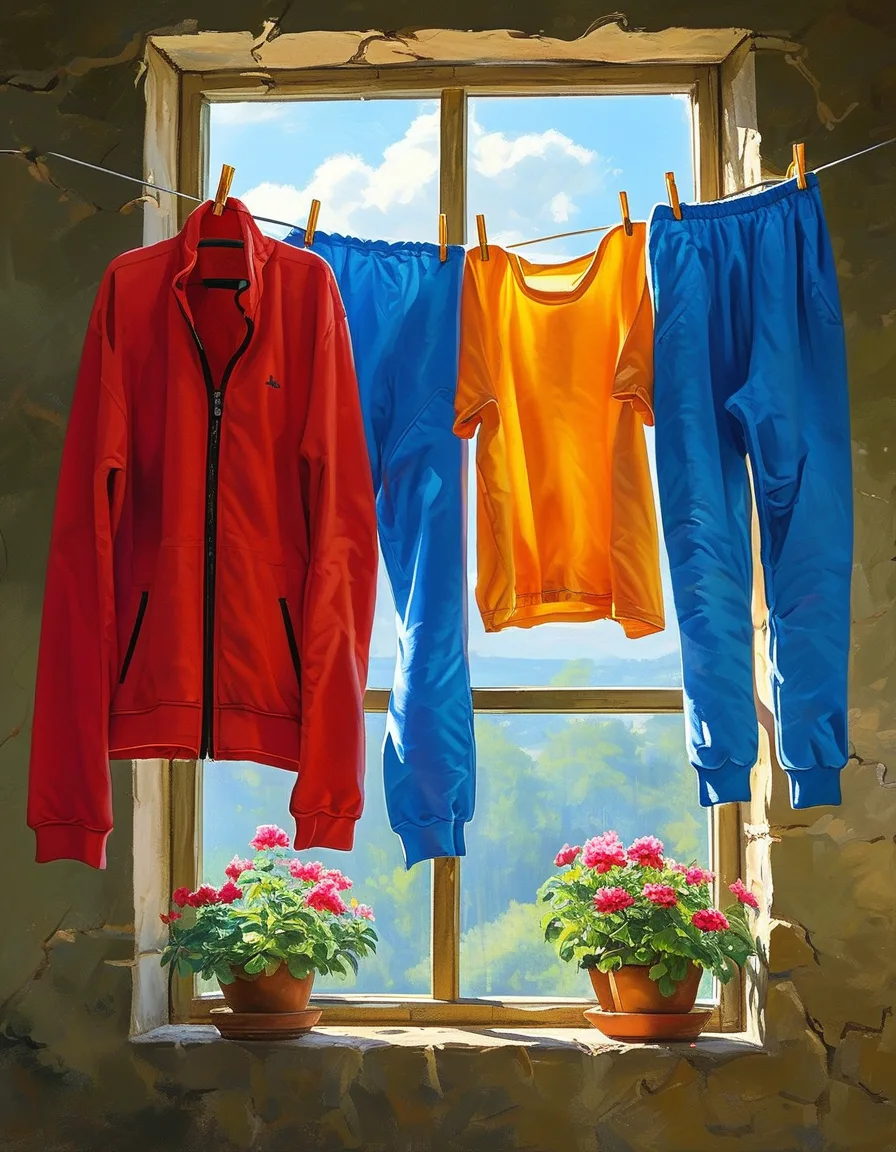
Making it work in real homes: the indoor-rack reality (the folding rack that lives near airflow — the window, the fan, the balcony; the damp-room rack grows the smell it was avoiding, so air movement is the spec), the space-efficient kit (the over-door racks, the retractable lines, the sock-octopus hangers — small-apartment drying is a solved equipment problem), the timing rhythm (the evening wash → overnight dry → morning fold cycle that never queues; activewear’s quick-dry fabrics line-dry overnight by design — the technical wardrobe is the easiest to convert), and the stiffness fix (line-dried towels and cottons soften with a vigorous shake and, if needed, ten dryer minutes on air-only — the hybrid that keeps 90% of the savings).

The Exceptions Worth Knowing
Where heat still earns its place: the hygiene tier (bedding and towels on the hot cycle per the dust-mite and post-illness protocols — the 60°C wash has real jobs; whites-brightening too), the sweat-stink reality (synthetic workout tops with set-in odor occasionally want the sport-wash detergent or a warm cycle — the polyester-stink chemistry sometimes outranks the cold-wash rule; sunshine is the free deodorizer that closes the gap), the dryer’s legal uses (the air-only fluff, the emergency turnaround, the towel-softening minutes — the appliance demoted, not banished), and the label respect (the care hieroglyphics still govern — cold-and-line is the default, not an override).

The Habit Installation
Making it automatic: the dial-set-and-forget move (the machine’s default changed to cold ONCE — the decision made permanently; most loads never needed the choice), the rack-always-ready rule (the folded rack behind a door is a skipped habit — the standing rack near the machine is the friction audit applied to laundry), the activewear-first conversion (start with the technical wardrobe — it dries fastest and benefits most; the elastane lifespan math shows up within months as leggings that still fit like leggings), and the payoff ledger (the garment budget that stopped hemorrhaging, the utility line that dropped, the wardrobe that ages slower — one habit, three accounts, compounding quietly). Cold by default, line by design: laundry’s cheapest upgrade.
Set the dial cold once, rack stays standing, sunshine deodorizes, hot keeps its two jobs. Cold-wash-line-dry pays clothes, cash and carbon — the triple win hiding in the utility room.
See It in Motion
Seen here: UPF 50+ Short Sleeve Rashguard Swim Shirt — shop it on bubblelime.com
Keep Reading
This article is for general informational and styling purposes only. Fit, sizing, and product availability may vary.