Tour 1: What Actually Happens Between a Plastic Bottle and Your Recycled Leggings
Quick Answer: Recycled polyester leggings go through five real stages — collection and sorting of PET bottles, cleaning and shredding into flakes, melting flakes into new polyester chips, spinning chips into yarn, and finally knitting that yarn into fabric — and understanding each stage helps you spot genuine recycled-content claims versus vague marketing language.

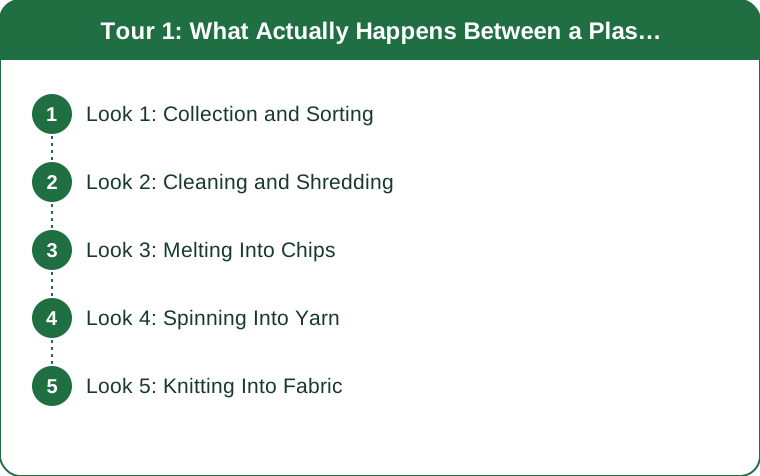
Look 1: Collection and Sorting
It starts with clear PET plastic bottles collected through recycling streams, sorted by color and plastic type since even small contamination affects fabric quality later. Bottles mixed with other plastics get pulled out at this stage — sorting accuracy directly determines how usable the batch is downstream.
Look 2: Cleaning and Shredding
Sorted bottles are washed to remove labels, caps, and residue, then mechanically shredded into small plastic flakes. This step matters more than it sounds — inadequate cleaning leaves contaminants that weaken the resulting yarn’s strength and durability.

Look 3: Melting Into Chips
Clean flakes are melted down and reformed into small polyester pellets or chips, essentially raw polyester material chemically similar to virgin polyester but sourced from waste plastic rather than new petroleum. This is the stage where ‘recycled polyester’ technically becomes usable textile raw material.
Look 4: Spinning Into Yarn
The chips are melted again and extruded through tiny spinnerets into continuous fine fibers, which are then twisted into yarn. The quality of this spinning process affects how soft, stretchy, and durable the final fabric feels against skin.
Look 5: Knitting Into Fabric
Finally, the yarn is knitted into the stretchy fabric used in leggings, often blended with a small percentage of spandex for stretch recovery. This is also where finishes like moisture-wicking treatments get applied, which is why ‘100% recycled’ fabric claims can still involve some non-recycled additive content.
TL;DR:
- Recycled leggings start as sorted, cleaned PET bottles before any fabric-making begins
- Shredding and melting turn bottles into raw polyester chips
- Chips are spun into yarn and knitted into the final stretch fabric
- Blended finishes mean ‘100% recycled’ often still includes small non-recycled components
Knowing this five-stage path makes it much easier to read past vague ‘eco-friendly’ labels toward what’s actually verifiable.
See It in Motion
Seen here: High Waist Yoga Leggings with Side Pockets — shop it on bubblelime.com
Keep Reading
This article is for general informational and styling purposes only. Fit, sizing, and product availability may vary.