5 Storage Steps That Decide Whether Your Summer Activewear Survives the Winter
Quick Answer: Wash everything before storing, dry it completely, fold rather than hang, keep it cool, dark and breathable, and never use plastic bags or vacuum bags for elastane garments. Residual body oils and sweat oxidize over months and permanently degrade elastane, which is why a set stored dirty comes out with dead recovery even though it was fine in September.
The compression point surprises people most: vacuum storage, which seems ideal for saving space, is one of the worst things you can do to a stretch garment.
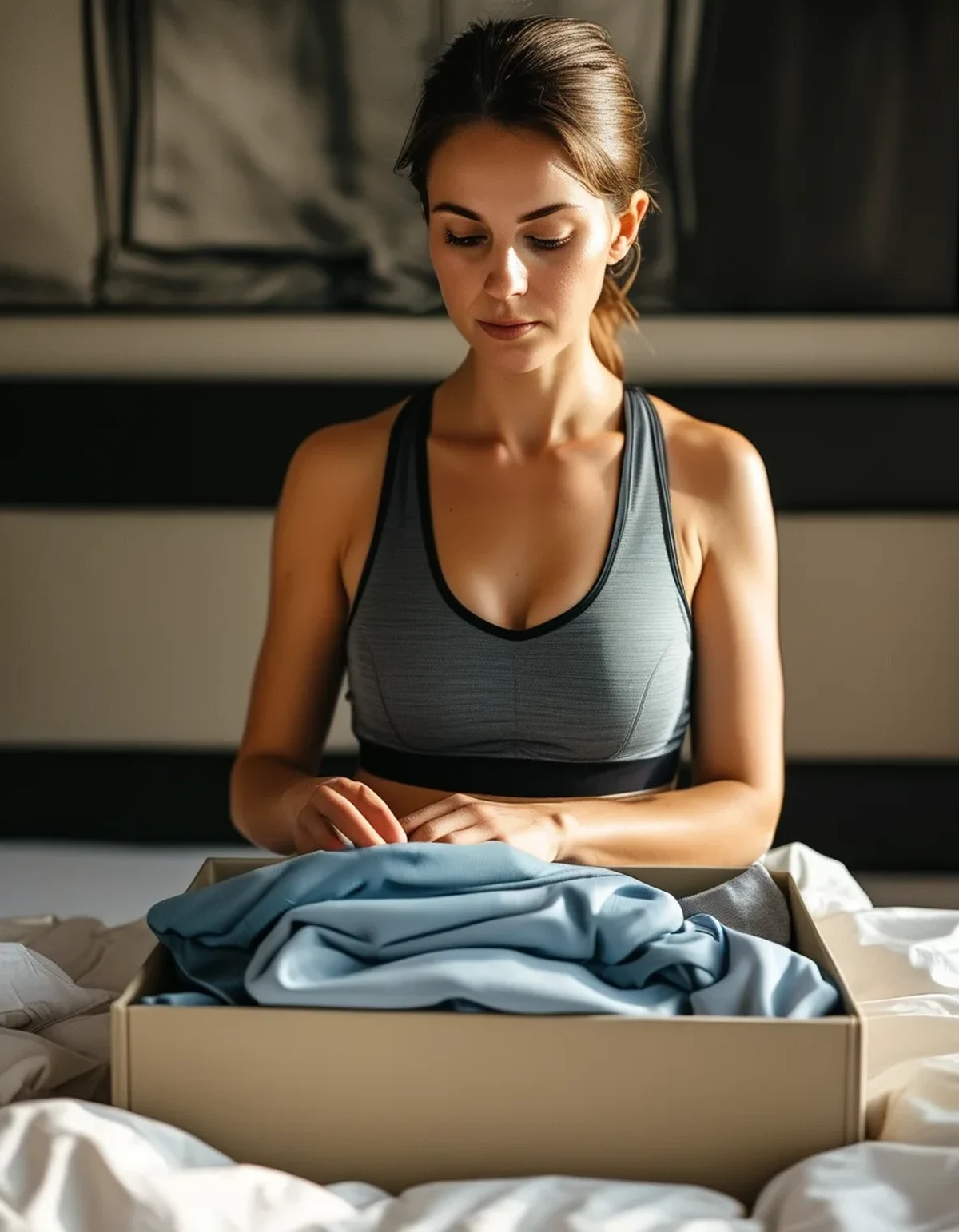
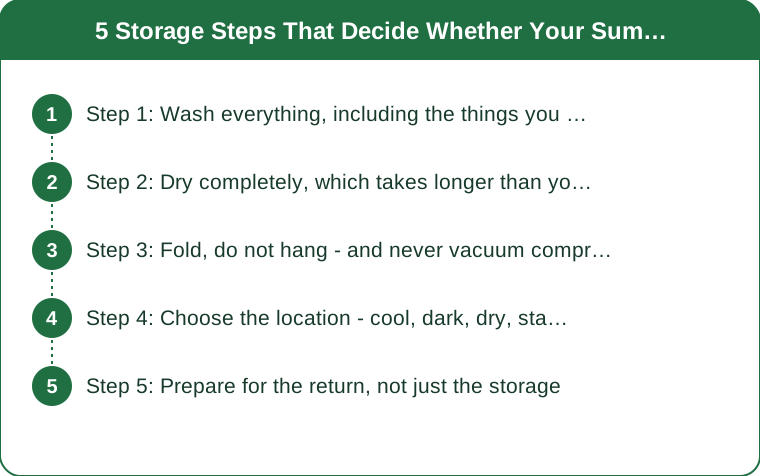
Step 1: Wash everything, including the things you barely wore
This is the step that determines whether the rest matters.
What is left on activewear after wearing. Body oils, sweat salts, skin cells, deodorant residue, and sunscreen. Even a garment worn once and hung to dry carries all of these, and hanging dry does not remove them.
Why it matters over six months rather than six days.
- Body oils oxidize over time, becoming both harder to remove and chemically more aggressive. A stain that would have washed out in September is permanent by March
- Sweat salts attract moisture from the air, creating localized damp conditions that favor mildew
- Residual oils accelerate elastane breakdown. This is the significant one - elastane degrades faster in contact with body oils, and six months is long enough for the effect to be measurable
- Bacteria feeding on residue produce odors that become permanent, which is why some stored activewear smells even after washing on removal
How to wash for storage specifically:
- Cold water, since heat damages elastane
- A detergent designed for synthetics, or a small amount of ordinary detergent. Too much detergent leaves residue, which is its own problem
- No fabric softener, ever. It coats fibers, destroys wicking, and leaves a residue that attracts more soil
- Inside out, which cleans the surface that contacts skin
- Consider a sport-specific wash for anything that has developed odor, since these are formulated to break down body oils that ordinary detergent leaves behind
The item people always skip: swimwear and anything worn for water activities. Chlorine residue continues to degrade elastane in storage and it is the single fastest way to destroy stretch fabric. Rinse thoroughly, wash, and store completely dry.
Step 2: Dry completely, which takes longer than you think
Storing anything even slightly damp is the fastest way to ruin a whole box.
Why it matters so much. Mildew needs moisture, warmth and darkness, and a storage box provides two of the three. Adding the third guarantees the outcome, and mildew on synthetic fabric is very difficult to remove and often leaves permanent staining and odor.
Where garments hide moisture:
- Thick waistbands, which hold water long after the panel is dry
- Padded bra cups, which are the single most common source of stored-clothing mildew
- Seams and gussets, where multiple fabric layers meet
- Anything folded while drying, which traps moisture in the fold
How to be sure:
- Air dry flat or hanging, out of direct sunlight. UV degrades elastane, so a sunny drying spot is doing damage
- Give it longer than feels necessary - an extra 12 hours in a well-ventilated room after it feels dry
- Press the thick sections against your cheek, which detects residual coolness from evaporation better than fingers do
- Never store items straight from a dryer, which sounds counterintuitive. Warm garments create condensation inside a sealed container as they cool
On tumble drying generally. Heat is the main enemy of elastane, and the dryer is where most activewear dies. If you use one at all, use the lowest heat setting and remove items while slightly damp, then air dry the rest of the way. For storage prep specifically, skip the dryer entirely.
The container matters here too. A breathable cotton storage bag or a cardboard box allows residual moisture to escape. A sealed plastic bin traps it, which is why the next step matters.
Step 3: Fold, do not hang - and never vacuum compress
Two rules that go against instinct and matter enormously for stretch fabric.
Why hanging damages activewear. Gravity applies a constant, uneven load to the fabric over months. Elastane under sustained tension loses recovery - the fibers gradually stop returning to their original length. Over six months on a hanger, leggings and sports bras can permanently stretch at the shoulder or waistband.
- Hang only structured items: jackets, and anything with minimal stretch
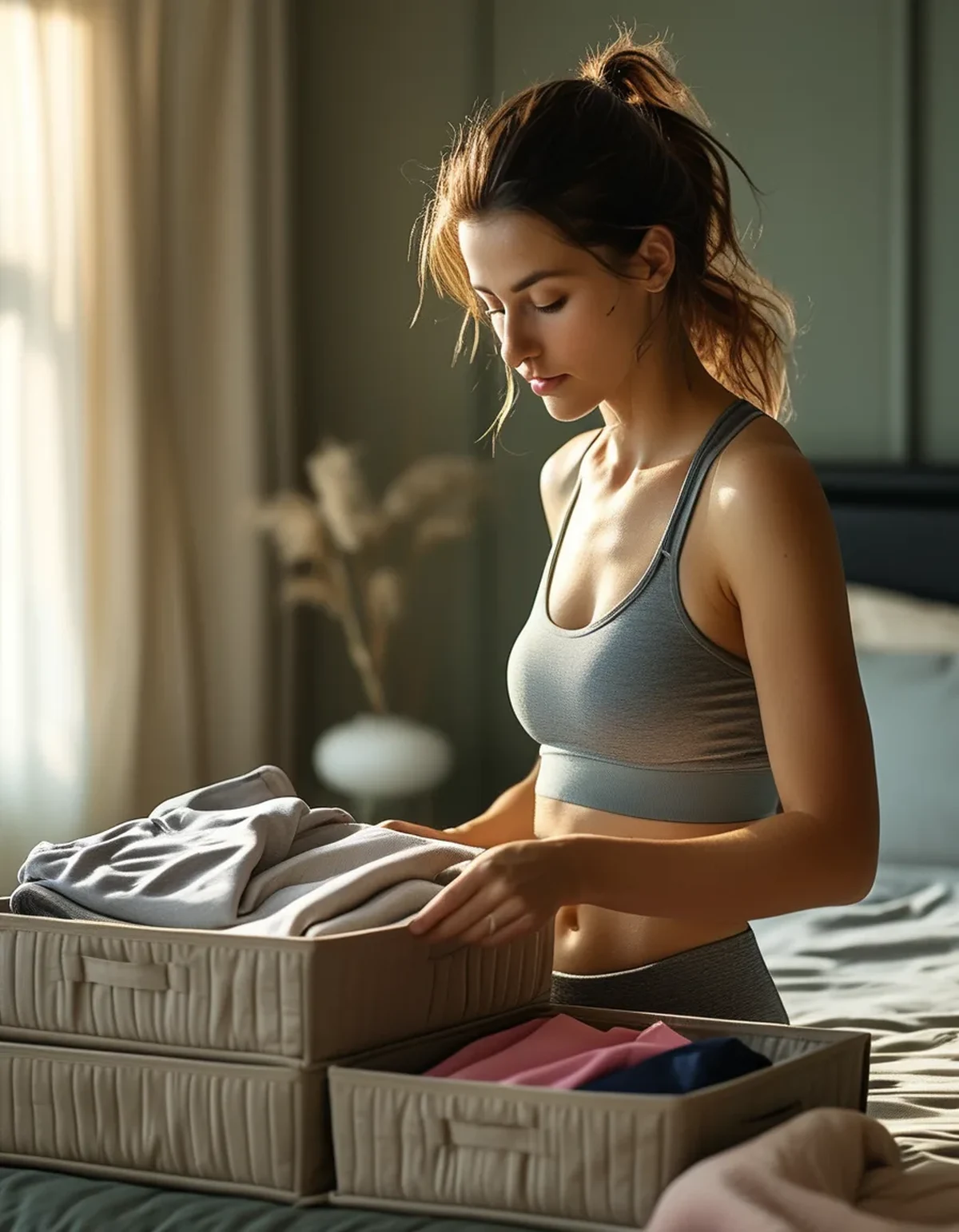
- Fold everything with elastane: leggings, sports bras, tops, shorts
Why vacuum bags are actively harmful. They seem ideal for off-season storage and they are close to the worst option for stretch garments.
- Compression holds elastane in a distorted state for months, and the fibers take a set. Garments emerge with permanent creases and reduced recovery
- The airtight seal traps any residual moisture against the fabric with nowhere to go
- Foam bra cups crush permanently and do not recover their shape
How to fold properly:
- Leggings folded in half lengthwise then loosely into thirds. Avoid tight rolls, which crease at the fold lines
- Sports bras laid flat, cups not folded into each other. Folding one cup into the other permanently distorts both, and it is the standard way people store them
- Loose stacks rather than tight packing. Compression in any form is what you are avoiding
Container choice, in order of preference:
- A breathable fabric storage bag or a cardboard box. Allows air exchange and protects from light and dust
- A plastic bin with the lid loosely fitted, which is acceptable if the room is dry
- A sealed airtight plastic bin, which is only acceptable if you are certain everything is bone dry
- Never a plastic bag, which traps moisture completely
Step 4: Choose the location - cool, dark, dry, stable
The four conditions, and most homes have exactly one good spot.
Cool. Heat accelerates the chemical breakdown of elastane, and the effect compounds over months.
- The worst locations: attics and lofts, which reach extreme temperatures in summer and swing wildly year-round
- Also poor: near radiators, water heaters, or in a heated garage
Dark. UV degrades elastane and fades dyes.
- Never store in clear containers near a window
- Even indirect daylight over six months causes measurable fading
Dry. Damp is the primary cause of mildew and it does not need to be visibly wet to matter.
- Basements are frequently too humid, even ones that seem dry. A cheap humidity monitor answers the question definitively
- Aim for below about 60 percent relative humidity
- Silica gel packets in the container help meaningfully and cost almost nothing
Stable. Repeated temperature and humidity cycling is harder on fabric than steady conditions at a slightly worse level.
Which leaves, in most homes: the top of a wardrobe in a bedroom, or under a bed. Both are cool, dark, dry and stable, and both are considerably better than a loft or a basement despite being less convenient.
On pests, which are worth a mention. Moths target natural fibers rather than synthetics, so pure activewear is largely safe. Anything with a wool or cotton content is not, and a cedar block or lavender sachet in the container is cheap insurance. Do not use mothballs on synthetics - the chemicals can interact with the fabric and the smell is extremely persistent.
Step 5: Prepare for the return, not just the storage
The last step is the one nobody does, and it is what makes next spring easy.
Sort before storing, not after.
- Anything already showing dead recovery, pilling, or lost opacity should not be stored. It will be worse in six months and you will not want it. Deal with it now - repair, repurpose or recycle
- Be honest about what you did not wear all summer. A garment unworn for a full season will very likely be unworn next season too
- Storage is not a decision-deferral system, though it is very commonly used as one
Label properly. Contents, not categories.
- Summer leggings and tanks, 8 items beats summer clothes
- A photo of the contents taped to the box takes ten seconds and saves opening three boxes in April
Note anything that needs attention.
- A seam starting to fail, a drawstring pulled through, a small hole. Write it on the label so it gets fixed rather than rediscovered as a problem in the changing room
- Small repairs are dramatically easier before six months of storage sets the damage
Plan the return.
- Air everything for a day before wearing. Stored fabric can carry a storage smell that disappears with a few hours of ventilation
- A quick wash before first wear if the storage location was less than ideal
- Check elastane recovery on the first wear - the ten-squat test - and be prepared to accept that some items did not survive
The wider point about this whole process. Activewear is among the most resource-intensive clothing to produce, and the single most effective sustainability action available to an individual owner is making garments last longer. Six months of correct storage costs about an hour of work per year and can add years to a wardrobe. That is a better return than almost any purchasing decision.
TL;DR:
- Wash everything before storing - body oils oxidize over months and permanently degrade elastane
- Dry completely, giving thick waistbands and padded cups an extra 12 hours; damp storage means mildew
- Fold, never hang stretch garments, and never vacuum compress - compression sets elastane permanently
- Cool, dark, dry and stable: top of a wardrobe or under a bed beats a loft or basement every time
- Sort honestly before storing, label with contents, and note repairs needed while they are still small
Making garments last is the highest-impact sustainability action an owner has. An hour a year buys years of wear.
See It in Motion
Seen here: UPF 50+ Racerback Yoga Tank Top — shop it on bubblelime.com
Keep Reading
This article is for general informational and styling purposes only. Fit, sizing, and product availability may vary.