5 Signs an Activewear Brand Is Actually Sustainable — Not Just Labeled That Way
Quick Answer: Real sustainability shows up as specific, verifiable details — named recycled material percentages, published supply chain information, and third-party certifications — not vague words like ‘eco-friendly’ or ‘conscious’ printed on a tag with no backing detail. Five concrete signs separate the real thing from the marketing language.
Every activewear rack these days has at least one item claiming to be sustainable. Some of those claims are backed by real practice; plenty are just a word on a tag. Here’s what actually distinguishes the two.

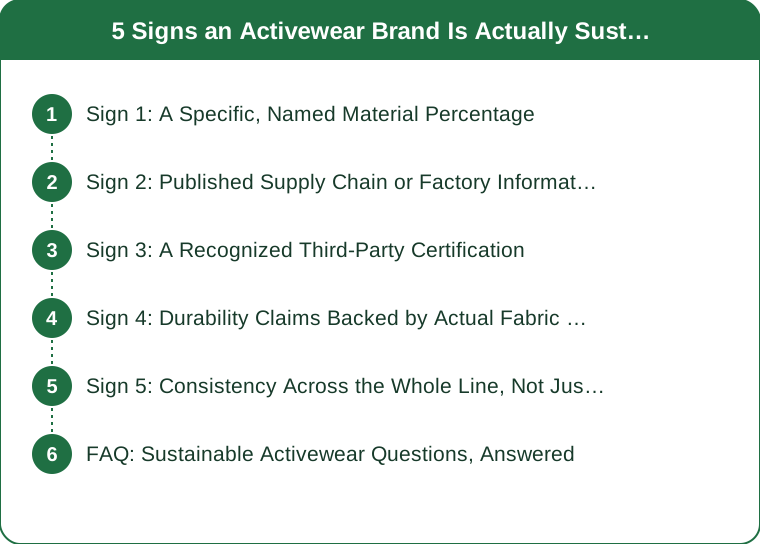
Sign 1: A Specific, Named Material Percentage
A label reading “made with 40% recycled polyester” is a real, checkable claim. A label reading just “eco-friendly fabric” with no percentage or material name is unverifiable marketing language, since there’s nothing specific to confirm.
Sign 2: Published Supply Chain or Factory Information
Brands with genuine sustainability practices tend to publish at least some factory location or supply chain transparency information, since verifiable claims require something to actually point to — vague sourcing language with zero specifics is a common tell of the opposite.
Sign 3: A Recognized Third-Party Certification
Certifications like GOTS, OEKO-TEX, or Bluesign involve independent verification, unlike a brand’s own self-applied ‘green’ badge — a real certification logo is checkable against the certifying body’s public registry, while a self-designed badge isn’t.

Sign 4: Durability Claims Backed by Actual Fabric Weight or Warranty
Sustainable practice includes making clothes that last, so a brand offering a genuine repair program or extended warranty is putting money behind the durability claim — a brand that just says ‘built to last’ with no backing policy is making a marketing statement, not a commitment.
Sign 5: Consistency Across the Whole Line, Not Just One Flagship Item
A single “eco capsule” collection sitting alongside an otherwise unchanged, non-sustainable core line is a common greenwashing pattern — genuine practice tends to show up as a gradual shift across the broader product range, not one isolated marketing product.
FAQ: Sustainable Activewear Questions, Answered
Is a ‘made from recycled materials’ label always trustworthy?
Only if it names a specific percentage and material — a vague claim with no percentage is far less verifiable than a specific one.
Do certifications actually guarantee ethical practice?
They verify specific standards (chemical use, labor practices depending on the certification) rather than guaranteeing everything about a brand, but they’re still more reliable than a self-applied label.
Why do so many brands use vague sustainability language instead of specifics?
Vague language is cheaper and requires no independent verification, while specific claims (percentages, certifications) require actual practice changes to back them up.
TL;DR:
- Specific named material percentages beat vague words like ‘eco-friendly’
- Published supply chain details and real third-party certifications are checkable, self-applied badges aren’t
- Genuine durability claims come with a repair program or warranty behind them
- Real sustainability shows up across a whole line, not just one flagship ‘eco’ item
The tag’s language matters less than what’s actually specific and checkable behind it.
See It in Motion
Seen here: Yoga Jogger Sweatpants with Pockets — shop it on bubblelime.com
Keep Reading
This article is for general informational and styling purposes only. Fit, sizing, and product availability may vary.