The 5-Step Laundry Routine That Actually Extends Eco-Friendly Activewear's Life
Quick Answer: A laundry routine of cold water, mesh bag, gentle cycle, air drying, and infrequent washing (only after genuinely sweaty sessions) extends eco-friendly activewear’s life significantly more than a standard hot-wash-and-dryer routine, since many sustainable fabric blends use recycled fibers that are more sensitive to heat and agitation than virgin synthetics.
You bought the eco-friendly leggings specifically because they’re supposed to last, then washed them exactly like everything else — that mismatch is usually why they don’t hold up as long as expected.
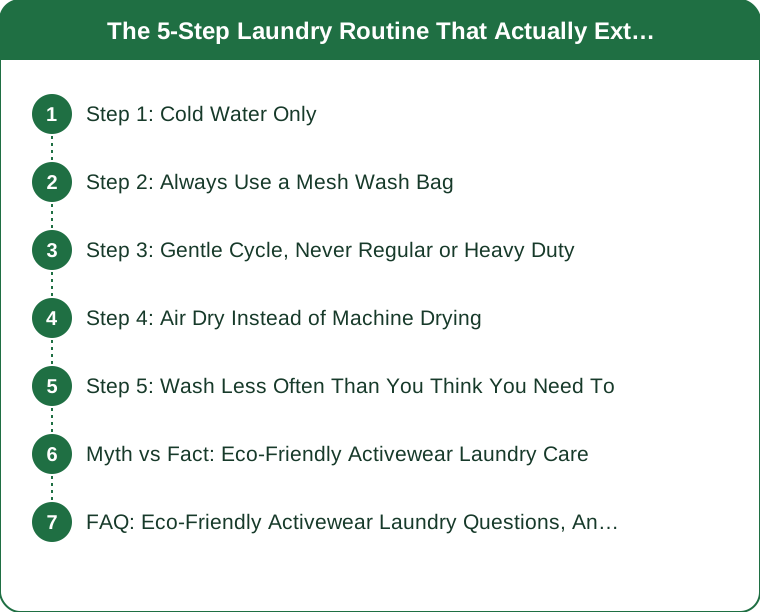
Step 1: Cold Water Only
Recycled and regenerated fibers, common in eco-friendly activewear, tend to break down faster under hot water than virgin polyester or nylon — cold water (below 86°F/30°C) preserves both the fiber structure and any stretch-recovery treatment applied during manufacturing, which is easy to lose with repeated hot washes.
Step 2: Always Use a Mesh Wash Bag
A mesh bag reduces the friction and stretching that happens when activewear tumbles loosely against zippers, buttons, or rougher fabrics in a mixed load — this friction is a major contributor to pilling and micro-tears, and it matters more for eco fabrics that are sometimes woven slightly less densely than conventional synthetics.
Step 3: Gentle Cycle, Never Regular or Heavy Duty
The mechanical agitation of a regular or heavy-duty cycle stresses stretch fibers and seams far more than a gentle cycle does — the modest time savings of a shorter, harsher cycle isn’t worth the accelerated wear it causes specifically to compression and stretch-recovery components of the fabric.
Step 4: Air Dry Instead of Machine Drying
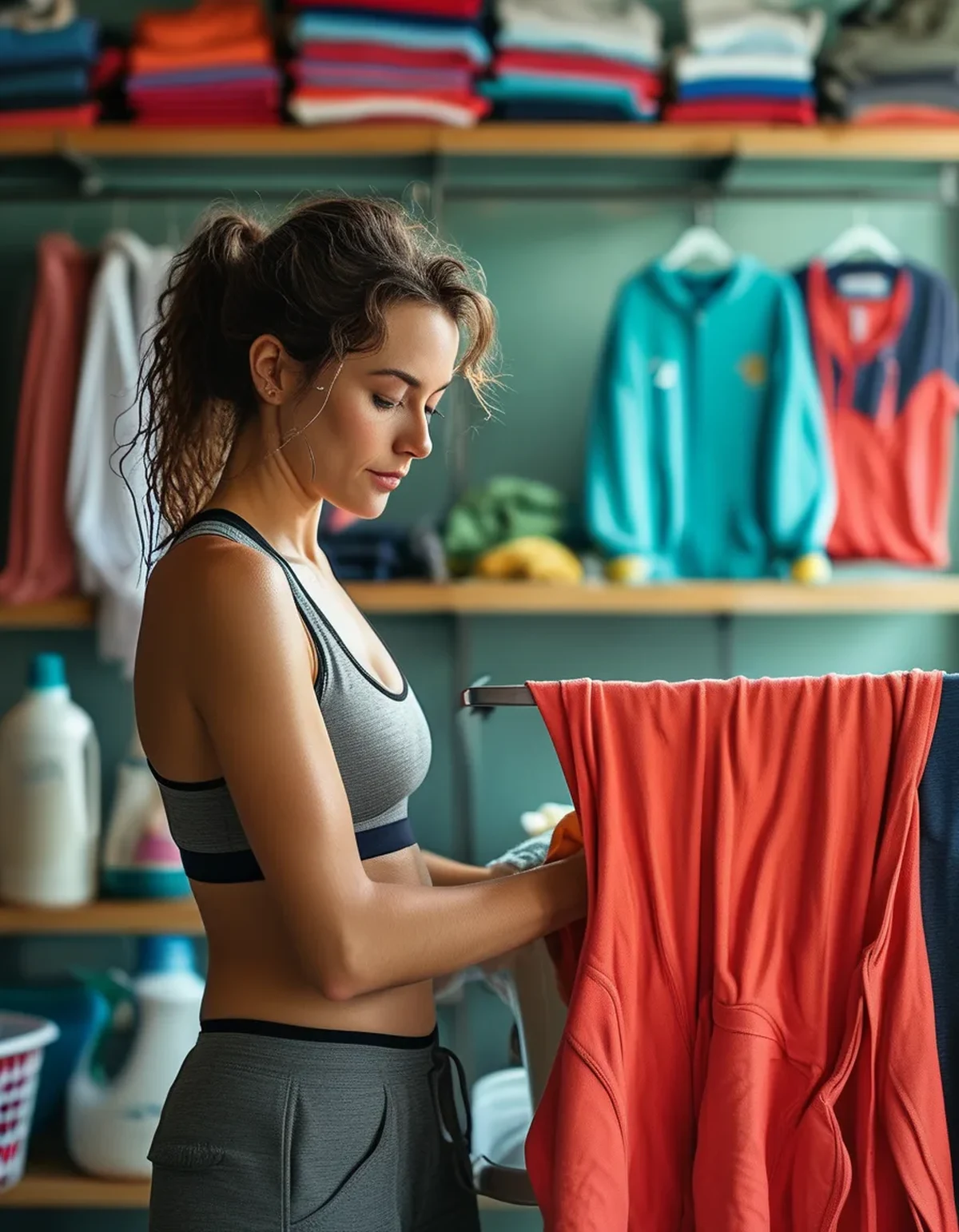
Dryer heat is one of the single biggest degraders of stretch fiber elasticity in any activewear, eco-friendly or not, but recycled fiber blends are frequently more heat-sensitive than virgin synthetic — laying flat or hanging to air dry preserves both the garment’s shape and its compression performance far longer than repeated dryer cycles.
Step 5: Wash Less Often Than You Think You Need To
Unless a session was genuinely sweat-soaked, activewear worn for a lower-intensity session or a short errand often doesn’t need a full wash — airing the piece out and spot-cleaning if needed reduces total wash-cycle count over the garment’s life, which is one of the most direct ways to extend its usable lifespan.
Myth vs Fact: Eco-Friendly Activewear Laundry Care
Myth: Eco-friendly fabric care is basically the same as regular activewear care. Fact: recycled and regenerated fibers are often more heat- and agitation-sensitive, making gentle-specific care more important, not just a nice-to-have.
Myth: A gentle cycle takes too much extra time to bother with. Fact: most machines run a gentle cycle in a similar or only slightly longer timeframe than a regular cycle.
Myth: Air drying isn’t necessary if the fabric already feels sturdy. Fact: heat damage to stretch fibers accumulates invisibly over many cycles before it becomes obviously noticeable in fit and compression.
FAQ: Eco-Friendly Activewear Laundry Questions, Answered
Does using eco-friendly detergent actually matter for the garment itself, not just the environment?
Yes, to a degree — harsher conventional detergents can degrade fiber coatings faster over time, so a gentler detergent formulated for activewear or sensitive fabrics supports both the garment’s longevity and reduces environmental impact.
How often should genuinely eco-friendly activewear actually be washed?
After every genuinely sweaty session, but for lighter wear, airing out and spot-cleaning between full washes is a reasonable, fabric-friendly approach that most eco-conscious brands themselves recommend.
Is it worth hand-washing eco-friendly pieces instead of machine washing on gentle?
Hand-washing offers marginally gentler treatment, but a mesh-bagged gentle machine cycle gets close enough for most people’s practical routines without the added time investment.
TL;DR:
- Cold water and a mesh bag protect recycled fibers from the heat and friction damage that shortens their lifespan
- Gentle cycle and air drying preserve stretch-recovery performance far longer than regular cycles and dryer heat
- Washing less often — only after genuinely sweaty sessions — is one of the most direct ways to extend garment life
- Recycled fiber blends are generally more heat-sensitive than virgin synthetics, making this routine more important, not less
Switch to this 5-step routine on your next wash day and treat it as the default for eco-friendly pieces going forward, not a special occasion.
See It in Motion
Seen here: Crewneck Short Sleeve Workout T-Shirt — shop it on bubblelime.com
Keep Reading
This article is for general informational and styling purposes only. Fit, sizing, and product availability may vary.