The Anti-Haul: Escaping Activewear Overconsumption Without the Guilt Trip
Activewear became fast fashion’s fastest lane — the hauls, the drops, the sets in fourteen colorways — and the sustainable answer isn’t guilt; it’s arithmetic: most drawers already contain enough. The anti-haul guide: the mechanics, the audit and the rules that shrink footprints painlessly.

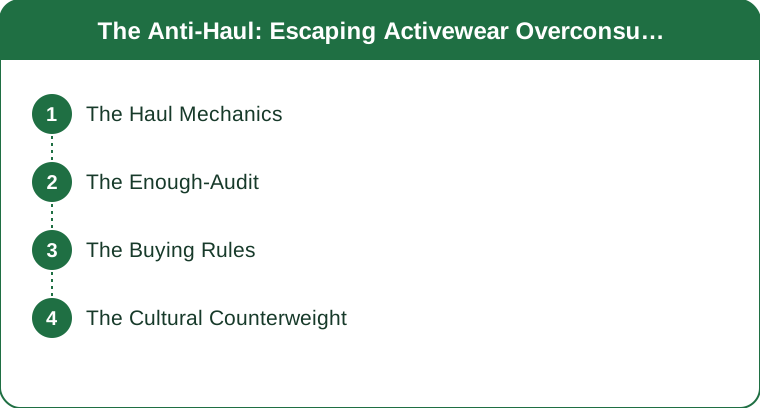
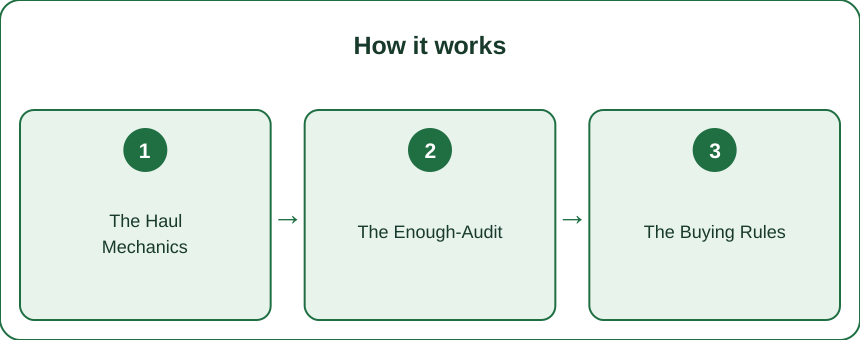
The Haul Mechanics
How the drawer overfilled: the drop-culture engine (limited colorways and restock alerts manufacture urgency for stretchy basics — scarcity marketing applied to leggings; the fourteen-colorway set exists to be collected, not needed), the price-point trap (cheap-enough-to-not-think purchases accumulate into a full drawer of almosts — the $15 impulse tier is where overconsumption hides), the algorithm’s wardrobe (the feed that learns you bought one legging shows you forty — the haul is partly served, not chosen), and the guilt-free reframe (the goal isn’t fashion asceticism — it’s buying with the same intention you train with; the anti-haul is a skill, not a penance).
The Enough-Audit
The drawer arithmetic: the wear-math census (count actual weekly workouts × 1.5 = the leggings-and-tops quantity that covers laundry cycles — most audits find double-to-triple the need; the number makes ‘enough’ concrete instead of moral), the rotation reality-check (the hanger-flip experiment for activewear — the drawer’s bottom third hasn’t trained in a year; the audit converts vague excess into a donation bag), the gap-list flip (the audit’s real product is the SHORT list of genuine needs — the dead sports bra, the winter layer; future purchases pre-approved by evidence), and the one-in-one-out installation (the capsule law that caps the drawer permanently — every purchase names its retiree).

The Buying Rules
The rules that hold at checkout: the 72-hour cart (activewear impulse survives hours, not days — the cart that waits three days shrinks itself; the drop-culture urgency is the tell, not the reason), the cost-per-wear promotion (the better-made piece worn 150 times beats three cheap ones worn 30 — the sustainability math and the budget math agree here; the dupe-vs-original framework’s eco chapter), the fabric-and-repair literacy (the recycled-fabric tier matured — the labels worth knowing; and the repair-first reflex: the small hole and the dead drawstring are fixes, not replacements), and the exit responsibility (the outgrown-but-good pieces resold or donated, the dead ones textile-recycled — the drawer’s exits managed like its entrances).
The Cultural Counterweight
Sustaining the mindset: the unfollow lever (the haul accounts and restock alerts trained the appetite — the feed audit is consumption management; the algorithm forgets fast), the enough-is-a-flex reframe (the capsule that trains five days a week in eight pieces is the actual flex — competence over collection; the one-mile-wear and monochrome systems run on few pieces by design), the community substitution (the buy-nothing groups and gear swaps that make circulation social), and the perspective clause (the single biggest activewear footprint choice is buying LESS, not buying perfectly — the recycled-fabric premium matters less than the fourth set not purchased; arithmetic beats absolution). The drawer was full; the feed just never said so.
Count the wear-math, cart waits 72 hours, repair before replace, unfollow the hauls. The anti-haul is arithmetic with better style — enough was already in the drawer.
See It in Motion
Seen here: Super High Waist Embossed Yoga Leggings with Inner Pocket — shop it on bubblelime.com
Keep Reading
This article is for general informational and styling purposes only. Fit, sizing, and product availability may vary.