How Much Microplastic Does a Load of Laundry With Leggings Actually Shed?
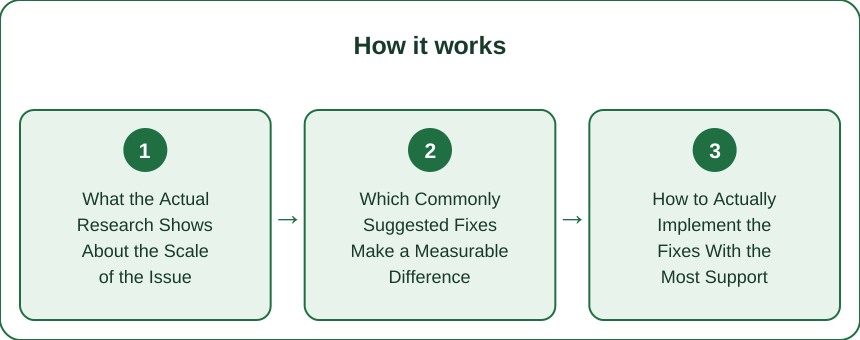
Synthetic activewear’s microplastic shedding gets discussed in broad, alarming terms without much specific information about the actual scale involved — how much a typical wash of leggings and workout tops actually releases, and whether the commonly suggested fixes make a real measurable difference. Here is what the actual research shows about the scale of the issue, and the specific practical steps that make a meaningful, evidence-supported difference.

What the Actual Research Shows About the Scale of the Issue
The measured reality: the the-a-single-load-of-synthetic-laundry-can-release-hundreds-of-thousands-to-millions-of-microfibers (the research measuring microfiber release per wash load finding genuinely large numbers, though the exact figure varies significantly by study, fabric type and washing conditions from the microplastic-laundry-wash-bag-blog logic — the the-actual-measured-numbers-are-large-though-with-meaningful-study-to-study-variation), the the-fabric-type-and-construction-significantly-affects-shedding-rate (the specific fabric blend, weave tightness and fiber type all measurably affecting how much a given garment sheds per wash, meaning not all synthetic activewear sheds equally — the fabric-specifics-matter-a-lot-shedding-isnt-uniform-across-all-synthetic-garments), the the-newer-garments-generally-shed-more-than-well-worn-ones-in-several-studies (the shedding rate often measured as higher for newer items, gradually decreasing somewhat as loose fiber fragments from manufacturing and cutting wear away over the first several washes — the new-garments-often-shed-disproportionately-in-their-first-several-washes-specifically), the the-wash-machine-type-and-settings-measurably-affect-total-fiber-release (the front-loading versus top-loading machines and specific wash settings like agitation intensity and water volume showing measurable differences in total fiber release in comparative research — the machine-type-and-settings-are-a-real-and-somewhat-controllable-variable-in-the-actual-research), the the-wastewater-treatment-capture-rates-vary-and-are-incomplete (the treatment facilities capturing a significant but incomplete portion of released microfibers, meaning some proportion does reach waterways regardless of the exact starting release number — the incomplete-capture-at-treatment-facilities-means-the-release-number-isnt-the-whole-story-either), and the reframe (the scale of the issue as genuinely significant and measurable, if variable, based on real research rather than vague or unquantified alarm — a real issue with real, if imperfect, numbers behind it)).

Which Commonly Suggested Fixes Make a Measurable Difference
What the evidence supports: the the-dedicated-microfiber-catching-laundry-bags-show-measurable-capture-rates-in-testing (the specific laundry bags designed to trap shed microfibers showing meaningful, testable capture percentages in independent testing, not just a marketing claim without backing — the this-specific-product-category-has-real-independent-testing-behind-its-core-claim), the the-external-washing-machine-filters-also-show-measurable-capture-in-testing (the aftermarket filter devices attached to washing machine drainage similarly showing measurable fiber capture in available testing, functioning through a different mechanism than the in-drum bag approach — the external-filters-are-a-second-independently-tested-approach-with-real-measured-capture), the the-cold-water-washing-reduces-shedding-somewhat-compared-to-hot-water-in-comparative-testing (the water temperature showing a measurable, if moderate, effect on shedding rate in comparative studies, supporting cold-wash-line-dry-case logic as a real if modest lever — the temperature-effect-is-real-though-more-moderate-than-the-dedicated-capture-tools), the the-shorter-lower-agitation-wash-cycles-reduce-shedding-compared-to-long-heavy-agitation-cycles (the cycle length and agitation intensity showing a measurable relationship with total fiber release, supporting gentler cycle settings as a real lever for synthetic loads specifically — the cycle-settings-are-a-real-though-secondary-lever-alongside-temperature), the the-reducing-total-wash-frequency-for-synthetic-activewear-reduces-total-shedding-simply-through-fewer-wash-events (the washing synthetic activewear less frequently, when hygienically reasonable, directly reducing total shedding events over time as a straightforward volume reduction, distinct from any per-wash capture technology — the fewer-total-wash-events-is-a-simple-and-direct-lever-independent-of-any-specific-product), and the frame (the fixes with real measured support as dedicated microfiber-catching bags, external washing machine filters, cold water washing, gentler shorter cycles, and reduced overall wash frequency for synthetics — several genuinely evidence-supported levers rather than one single silver-bullet fix).
How to Actually Implement the Fixes With the Most Support
The practical priority order: the prioritize-a-microfiber-catching-bag-or-filter-as-the-single-highest-impact-easy-change (the adopting one of the two independently tested capture-technology options as the change with the clearest measured impact for the least behavior change required — the this-is-the-highest-measured-impact-for-the-lowest-behavior-change-required), the the-switch-synthetic-activewear-loads-to-cold-water-specifically-as-a-simple-secondary-adjustment (the applying the cold-water finding specifically to synthetic activewear loads as a low-effort secondary lever alongside a capture bag or filter — the a-simple-settings-change-that-stacks-with-the-capture-technology-for-additional-benefit), the the-use-gentler-cycle-settings-for-synthetic-loads-specifically-rather-than-a-blanket-change-to-all-laundry (the applying reduced agitation and shorter cycles specifically to the loads most relevant to the issue, rather than changing all laundry habits uniformly — the targeting-the-setting-change-to-the-relevant-loads-specifically-is-more-practical-than-a-blanket-change), the the-extend-time-between-washes-for-activewear-when-hygienically-reasonable-from-the-how-to-make-your-activewear-last-longer-guide-logic (the washing activewear somewhat less frequently when odor and hygiene allow, directly reducing total wash events over time — the reduced-frequency-compounds-with-the-other-fixes-for-additional-total-reduction), the the-combine-multiple-fixes-together-rather-than-relying-on-just-one (the layering several of the evidence-supported approaches together, since they operate through different mechanisms and their effects appear to be at least partially additive — the combining-several-mechanistically-different-fixes-together-likely-produces-more-total-reduction-than-any-single-one-alone), and the frame (the practical priority as starting with a capture bag or filter as the biggest single lever, adding cold water and gentler cycles specifically for synthetic loads, reducing wash frequency where hygienically reasonable, and combining multiple approaches together — a real, evidence-informed reduction strategy rather than one isolated habit change).
Research measuring microfiber release finds that a single load of synthetic laundry can shed a genuinely significant number of fibers, with the exact figure varying by fabric type, garment age, and washing machine settings — newer garments often shed disproportionately more in their first several washes, and wastewater treatment facilities capture a significant but incomplete portion of what gets released. The fixes with real measured support include dedicated microfiber-catching laundry bags and external washing machine filters, both independently tested for actual capture rates, along with cold water washing and gentler, shorter wash cycles which show more moderate but still measurable reductions. Implement them by prioritizing a capture bag or filter as the single highest-impact easy change, switching synthetic activewear loads specifically to cold water and gentler cycles, reducing wash frequency for activewear when hygienically reasonable, and combining several of these approaches together since they work through different mechanisms and their effects appear to be at least partially additive.
See It in Motion
Seen here: High Waist Yoga Leggings with Inner Pocket — shop it on bubblelime.com
Keep Reading
This article is for general informational and styling purposes only. Fit, sizing, and product availability may vary.