How to Spot Greenwashing on Activewear Labels Before You Pay a Premium for It
Quick Answer: Vague, unquantified terms like ‘eco-friendly,’ ‘conscious,’ or ‘green’ on a label carry no regulated meaning and are common greenwashing red flags, while specific, verifiable claims — a named percentage of recycled material, a specific third-party certification (like GRS, OEKO-TEX, or bluesign), or a stated supply chain transparency report — are considerably more meaningful and harder to fake, making the specificity and verifiability of a claim the key thing to check rather than the general tone of the marketing language.
The presence of a vague sustainability buzzword without any specific, verifiable backing is itself often the clearest greenwashing signal.

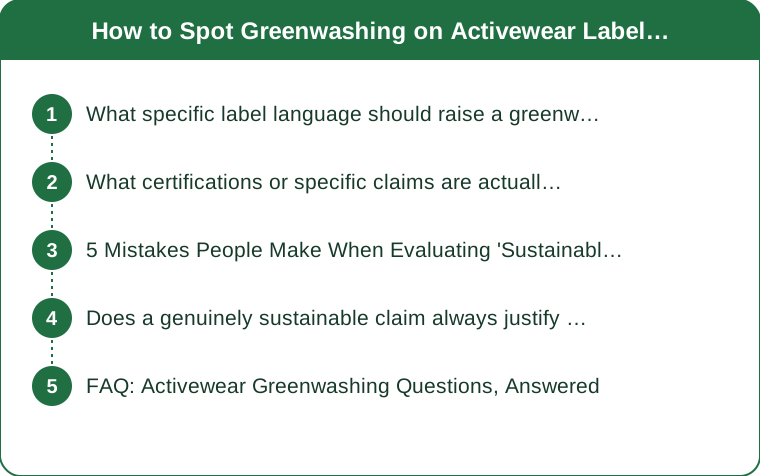
What specific label language should raise a greenwashing red flag?
Terms like ‘eco-friendly,’ ‘green,’ ‘conscious collection,’ or ‘better for the planet’ used without any specific percentage, material breakdown, or named certification are essentially unregulated marketing language that can be applied to almost any product regardless of actual environmental impact.
These terms aren’t necessarily lies, but their vagueness means they provide no actual verifiable information, which is exactly the greenwashing pattern to watch for — sustainability-sounding language standing in for verifiable substance.
What certifications or specific claims are actually meaningful and harder to fake?
Third-party certifications like GRS (Global Recycled Standard), OEKO-TEX Standard 100, or bluesign, along with specific stated percentages (for example, ‘78% recycled polyester’ rather than just ‘made with recycled materials’) represent verifiable, audited claims that carry actual accountability behind them, unlike vague marketing language.
Brands that publish specific supply chain transparency information (naming actual factories or providing detailed sourcing reports) are also demonstrating a meaningfully higher level of verifiable commitment than one relying on buzzwords alone.

5 Mistakes People Make When Evaluating ‘Sustainable’ Activewear Claims
Mistake 1: Trusting a general ‘eco-friendly’ label without looking for any specific supporting detail.
Mistake 2: Assuming a brand’s overall sustainability messaging applies equally to every single product line, when it may apply only to a specific limited collection.
Mistake 3: Not checking for third-party certification logos, which are more meaningful than a brand’s own self-described claims.
Mistake 4: Overlooking the durability and lifespan angle of sustainability — a genuinely durable, long-lasting garment can have a real sustainability edge that a ‘recycled but low-durability’ product doesn’t fully capture.
Mistake 5: Paying a significant price premium based solely on vague sustainability language, without confirming what specifically justifies that premium.
Does a genuinely sustainable claim always justify paying a higher price?
Not automatically — a verifiable sustainability claim (real certification, transparent sourcing) is meaningful information, but it doesn’t by itself guarantee the price premium is proportionate, since pricing also reflects brand positioning, marketing costs, and profit margin, not purely the cost of more sustainable materials or processes.
Comparing the specific verifiable claims (not just the presence of sustainability language) across a few brands at different price points is a more reliable way to judge whether a specific premium is reasonably justified by the actual sustainability difference.
FAQ: Activewear Greenwashing Questions, Answered
Are recycled polyester activewear claims generally trustworthy?
When backed by a specific percentage and ideally a certification like GRS, recycled polyester claims are generally verifiable and meaningful, though checking for the specific certification is more reliable than trusting the claim alone.
Does a brand’s overall reputation matter more than checking individual product claims?
Both matter, but checking the specific product’s claims and certifications is more reliable than assuming a brand’s general reputation applies uniformly across every item they sell.
Is there a resource for checking whether a specific sustainability certification is legitimate?
Most legitimate certifications (GRS, OEKO-TEX, bluesign) have public verification databases or clear information about what the certification actually requires, which is worth checking if a specific certification claim seems unfamiliar.
TL;DR:
- Vague terms like ‘eco-friendly’ or ‘conscious’ without specific backing are common greenwashing red flags
- Specific percentages and named third-party certifications (GRS, OEKO-TEX, bluesign) are more verifiable and meaningful
- A brand’s general sustainability reputation doesn’t guarantee every specific product line meets the same standard
- A sustainability claim doesn’t automatically justify a price premium without checking what specifically backs it
The more specific and verifiable a claim is, the more it’s likely worth something — vague green language alone usually isn’t.
See It in Motion
Seen here: High Waist Yoga Leggings with Side Pockets — shop it on bubblelime.com
Keep Reading
This article is for general informational and styling purposes only. Fit, sizing, and product availability may vary.