Does Washing Activewear in Cold Water Actually Make It Last Longer?
Quick Answer: Yes — hot water breaks down elastane fibers and accelerates color fading and pilling, so consistently washing activewear in cold water measurably slows this degradation and extends how long garments hold their shape and color.
It’s one of the simplest sustainability moves in your closet, and unlike a lot of eco-advice, it also directly benefits your wallet by delaying replacement purchases.
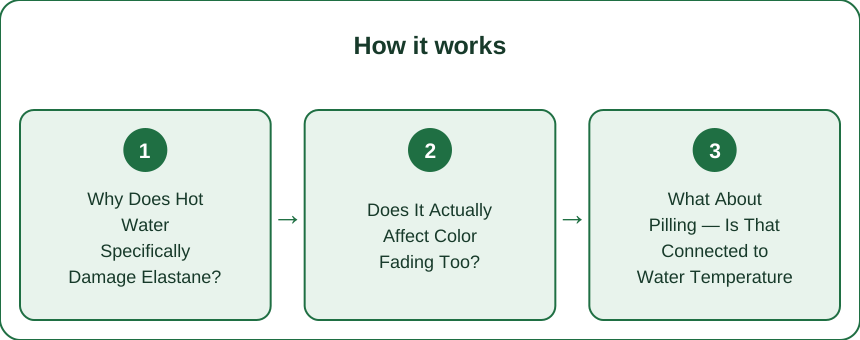
Why Does Hot Water Specifically Damage Elastane?
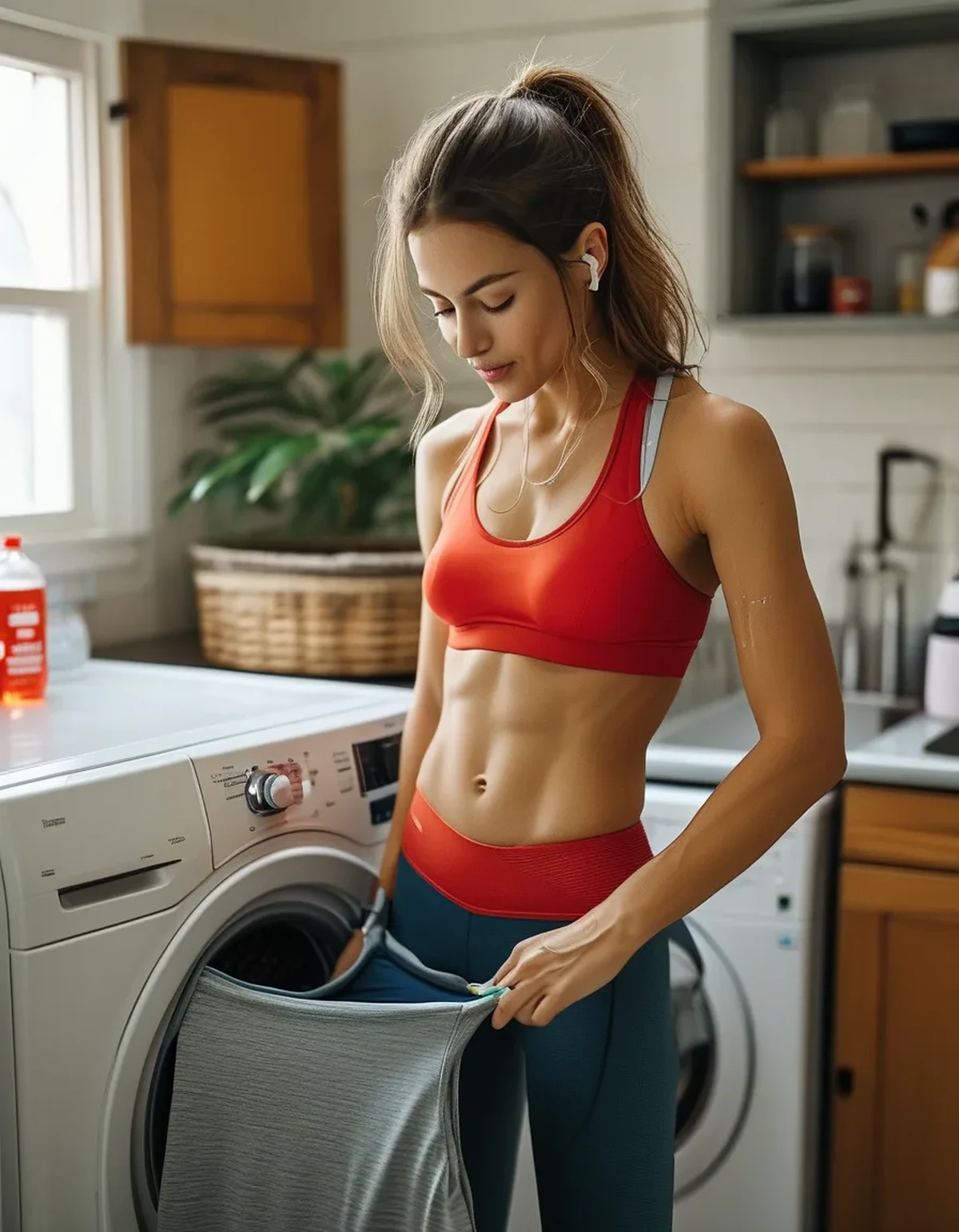
Elastane (spandex) fibers are sensitive to heat — repeated exposure to hot water causes the polymer chains to break down faster, which is the mechanism behind that gradual loss of stretch-and-recovery that makes leggings feel baggy over time. Cold water (around 30°C/86°F or lower) puts far less thermal stress on these fibers with each wash.
Over dozens of wash cycles, the cumulative difference between hot and cold washing becomes visible — garments washed consistently in cold water tend to hold shape and elasticity noticeably longer, often by many months of usable life.
Does It Actually Affect Color Fading Too?
Yes, and this compounds the elastane issue. Heat opens fabric fibers more, which lets dye molecules leach out faster during washing — this is why hot-washed dark leggings often fade to a dull gray-black faster than cold-washed ones. Cold water keeps fibers more closed, retaining dye better wash after wash.
This is especially noticeable on darker colors and printed patterns, where fading is the most visible early sign of activewear aging, even before any structural wear shows up.
What About Pilling — Is That Connected to Water Temperature Too?
Partially. Pilling is mostly caused by friction during the wash cycle, but heat softens synthetic fibers slightly, making them more prone to breaking off and tangling into pills. Cold washing alongside a gentler cycle (or a mesh laundry bag to reduce friction) tackles both major pilling causes at once rather than just one.
This is the case for the eco-active laundry routine: cold water plus reduced cycle intensity is a bigger lever for garment longevity than most people assume laundry settings could be.
Does This Actually Make a Meaningful Environmental Difference?
Individually, small — but water heating accounts for a meaningful share of a washing machine’s total energy use, so cold washing also reduces your laundry’s carbon footprint directly, separate from the garment-lifespan benefit. The bigger environmental win is indirect: activewear that lasts longer means fewer replacement purchases, which is where the larger footprint (manufacturing, shipping, eventual disposal) actually sits.
Extending a legging’s usable life by even 6 months to a year, multiplied across a wardrobe and years of purchasing habits, adds up to a meaningfully smaller footprint than any single wash cycle choice.
Are There Downsides to Cold Washing You Should Know About?
Cold water is less effective at removing heavy oils, sweat residue buildup, and some odor-causing bacteria compared to hot water — this is why heavily worn, sweat-saturated activewear sometimes needs an occasional deeper clean (a specialized sports detergent or an odor-eliminating soak) rather than relying on cold water alone for everything.
The practical approach: cold wash as your default for shape and color preservation, with an occasional dedicated deep-clean cycle for pieces that are visibly or noticeably holding onto odor despite regular washing.
FAQ: Cold Washing and Activewear Lifespan Questions, Answered
Does cold water actually clean activewear well enough?
For regular sweat and daily wear, yes — modern detergents are formulated to work in cold water, and most odor and residue lift out fine at 30°C without needing heat.
Will cold washing fix leggings that already feel baggy?
No — it slows future degradation but doesn’t restore elastane that’s already broken down. Think of it as prevention, not repair.
Is cold washing enough on its own, or do I still need to air dry?
Both matter — heat from a dryer does similar damage to elastane as hot water, so pairing cold washing with air drying (or low-heat tumble) gives the best combined result for lifespan.
TL;DR:
- Hot water breaks down elastane fibers faster, shortening how long activewear holds its shape
- Cold washing also preserves color better, since heat opens fibers and lets dye leach out
- Pilling is driven mainly by friction, but heat makes fibers more prone to it too
- The bigger environmental win is indirect — longer-lasting garments mean fewer replacement purchases
Switching your default wash temperature to cold is a five-second habit change with a genuinely measurable payoff on both your wardrobe and your footprint.
See It in Motion
Seen here: High Waist Yoga Leggings with Inner Pocket — shop it on bubblelime.com
Keep Reading
This article is for general informational and styling purposes only. Fit, sizing, and product availability may vary.